“Teachers can make such a profound impact on our lives and should be honored as heroes.”
Rainn Wilson
Acknowledgments
1. Collège Charlemagne ❤️
“The influence of a good teacher can never be erased.”
I owe a lot to the formidable teachers of the collège Charlemagne, where I was taught French, literature, Latin, history, geography, civics, philosophy, arts, music, mathematics, physics, chemistry, biology, and two foreign languages, English and Spanish (my two favorite subjects in collège and lycée).
I would not have been able to study at the Sorbonne, the London School of Economics, Fudan University, and the Complutense University of Madrid, without the wonderful teachers of French, English, and Spanish (like Ms. Anne-Gaëlle Costa) at the collège Charlemagne, a tuition-free public middle school in Paris, France.
Surprisingly, I had my first business and marketing classes at the age of 10 (which is very unusual) at the collège Charlemagne with my technology teacher, Mr. Hervé, who was more passionate about business, marketing, and strategy than about the national technology curriculum for teenagers, and who came to teach every day wearing an elegant business suit and a tie, looking like a CEO. Mr. Hervé taught me not to fear failure and to embrace experimentation through test and learn and learning by doing. He ignited my passion for business and marketing.
And his best friend at the collège Charlemagne, Mr. Olivier, my French teacher and homeroom teacher, taught me the importance of self-discipline and rigor to succeed in life and in your career. He always said: “Be demanding of yourself before being demanding of others”. One of the best teachers I have ever had, Mr. Olivier taught me to lead by example. He ignited my passion for management and leadership.
I will never forget their lessons.
2. La Sorbonne ❤️
“Omnibus sapientia, unicuique excellentia”
“Le savoir pour tous, l’excellence pour chacun”
“Knowledge for all, excellence for each”
Motto of the University of Paris I Panthéon-Sorbonne (1971).
I was the first person in my entire family to study business, management, economics, law, sociology, communication, marketing, and media, and more generally, to study HASS (Humanities, Arts, and Social Sciences) or SHAPE (social sciences, humanities and the arts for people and the economy).
The cosmopolitan and personalized curriculum in management studies, media studies and global studies in four different global cities (Paris, Madrid, London and Shanghai) that I designed for myself as a student was inspired by three existing programs at expensive private business schools in Paris:
1) ESCP (the oldest business school in the world, established in 1819) with its international curriculum since 1973, “3 years – 3 countries,” and its global campuses at the time in Paris, Berlin (transferred from Düsseldorf in 1985), Madrid (opened in 1988), and Oxford (later transferred to London in 2005).
2) The CEMS Master in International Management at HEC Paris, in partnership with ESADE (Barcelona), Bocconi (Milan), and LSE (London), among others, established in 1988.
3) The TRIUM Global Executive MBA ($208,080 cost in 2025), a joint program of HEC Paris, LSE, and NYU (New York University), established in 2001.
It is thanks to HEC that I first discovered the LSE (as a teenager, I only knew three universities abroad, Harvard, Oxford and Cambridge, like most people around the world). HEC also offered a leading MS in Entrepreneurship and ESCP (formerly ESCP-EAP and ESCP Europe) offered a leading MS in Media.
Coming from a modest, middle-class family, I couldn’t afford to study at ESCP or HEC Paris (tuition fees of approximately €65,000 or €70,000 in 2025), so I started to look into the 13 public universities in Paris (only €178 per year for a bachelor’s degree and €254 per year for a master’s degree in 2025), inheritors of the historic University of Paris split into 13 autonomous universities in 1970 after the student protests, strikes and civil disorder of May 68.
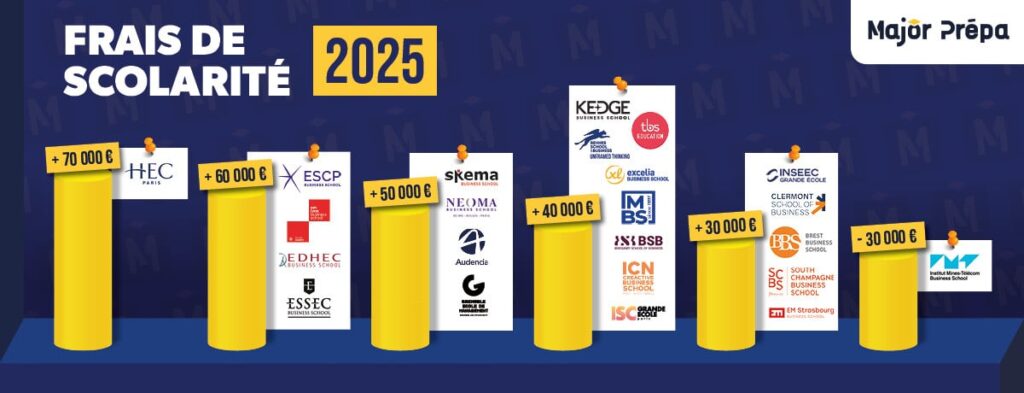
Source: Major Prépa, https://major-prepa.com/grandes-ecoles/ecoles-commerce/frais-de-scolarite-2025-hec-explose-la-barre-des-70k/
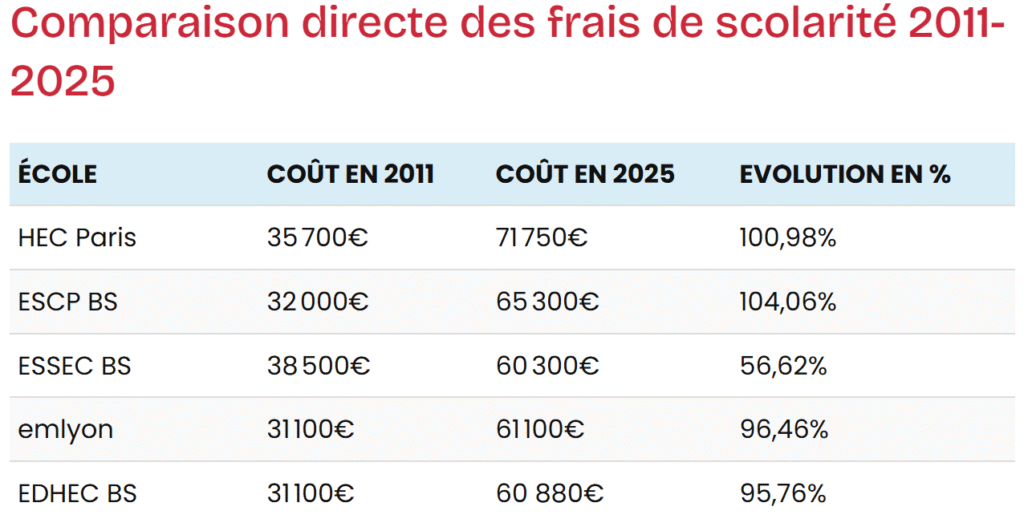
Source: Mister Prépa, https://misterprepa.net/levolution-des-frais-de-scolarite-combien-coute-une-grande-ecole-francaise
My choice was quick, easy, and obvious when I discovered in high school that the University of Paris 1 Panthéon-Sorbonne:
- was famous worldwide thanks to the Sorbonne brand name (the only French university known throughout the world),
- offered the best or second-best bachelor’s degrees and master’s degrees in business and management studies (ranked 1st or 2nd after Dauphine among all public universities in France in the national rankings published by L’Étudiant, Le Nouvel Économiste, L’Expansion, Capital and Challenges),
- was the leading French university for research in the cultural and creatives industries (see my literature review and my tribute to Henri Mercillon) and for teaching in the cultural and creative industries, and especially in media economics and media management (see my tribute to Daniel Sabatier),
- had prestigious international partners (Columbia University, Cornell University and NYU in the US, Oxford University and King’s College in the UK),
- cost only €137 per year for a bachelor’s degree back in 2002, around €200 per year for a master’s degree and €0 for scholarship students. Since its foundation in 1253 by Robert de Sorbon, the mission of the renowned Collège de Sorbonne (Faculty of Theology of the University of Paris) has been to provide free education to disadvantaged, underprivileged and poor students from all around the world.
Choosing Paris 1 was my first major decision as a manager and strategist. This crucial decision proved incredibly profitable, both economically and intellectually. I hated high school and wanted to drop out at 15. But studying a subject I am truly passionate about at the Sorbonne from the age of 17 opened up new horizons I could never have imagined as a young teenager. Some exceptional professors, whom I pay tribute to at the end of this page, have had a very important influence on my life.
I was then able to study at Complutense thanks to the Erasmus grant of the European Union. After completing five years of university studies (Bac+5), after earning all my Sorbonne degrees with honors and after graduating from one of the best master’s programs in strategy and consulting in France as valedictorian, I managed to get a student loan at a very attractive interest rate granted by a major French bank to study at LSE (one of the most expensive schools in Europe, around €35,000 for overseas students in 2025) and Fudan University (around €15,000 for international students in 2025).
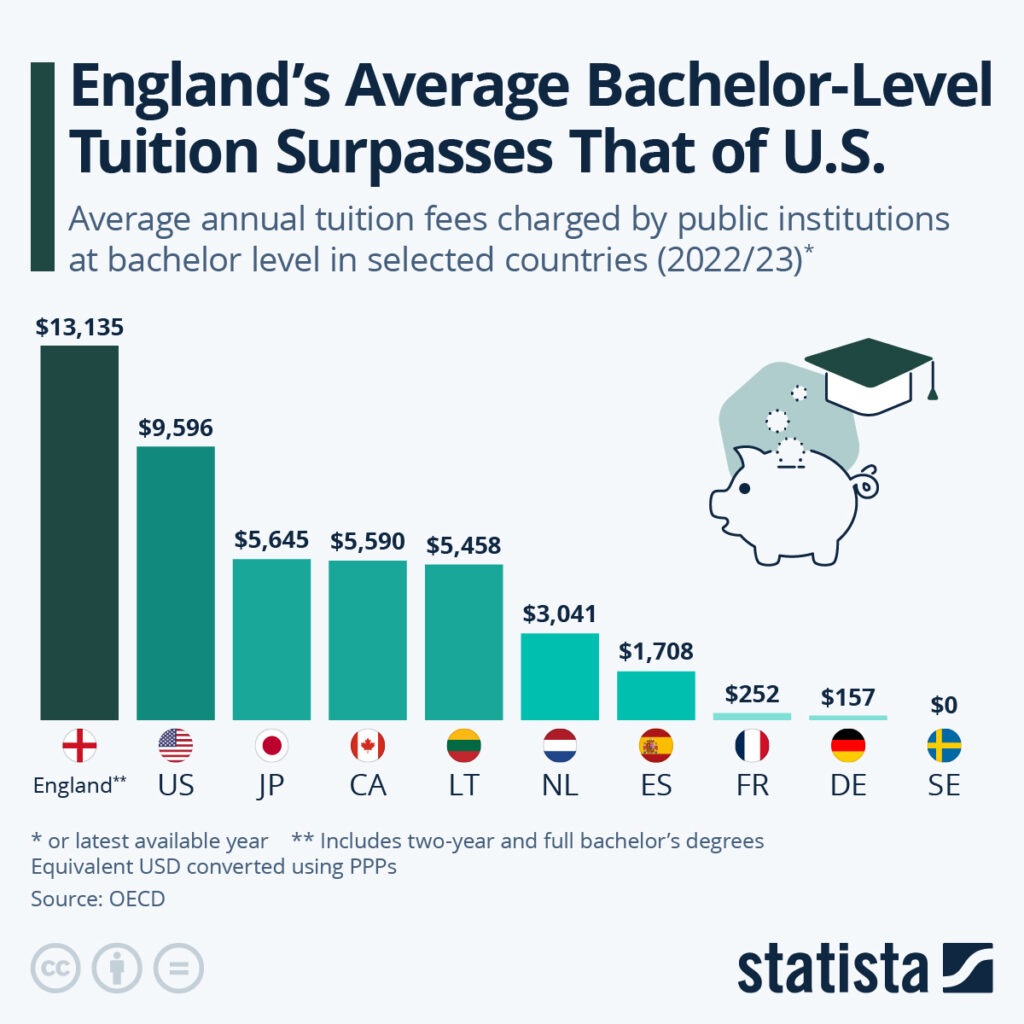
Source: average annual tuition fees charged by public institutions at bachelor level, source of the 2022/2023 data: OECD, 2025 infographic by Statista
I also received the merit award for outstanding academic achievements from the Chancellery of the Universities of Paris, a merit-based scholarship for the best students in the Paris region, including notably the full reimbursement of all the fees that I had paid from the first to the last year of my studies at the Sorbonne. Which means that I studied for free for five years at the prestigious University of Paris I Panthéon-Sorbonne and Complutense University of Madrid!
Merci la Sorbonne ❤️
3. Ten Influential Professors 🙏
“A good education can change anyone. A good teacher can change everything!”
3.1 Digital Marketing and Digital Transformation
Vincent Montet (EFAP)
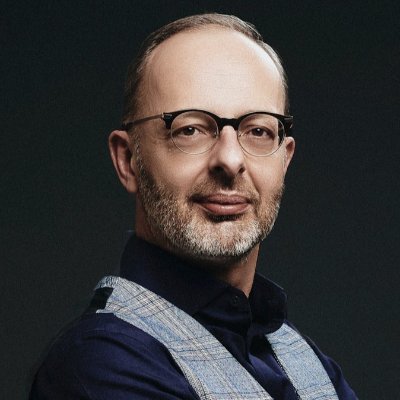
Vincent Montet was my Master Yoda 🙂
Vincent Montet was my professor of digital marketing and digital transformation at EFAP Paris and the founder and director of the Specialized MBA in Digital Marketing & Business (MBA DMB), from which I graduated valedictorian in 2017.
Vincent Montet is a French pioneer in digital marketing education, the founder of the first specialized MBA in Internet marketing and e-commerce in France, and one of the figures who helped institutionalize the teaching of e-commerce, digital marketing, digital transformation, and AI in France.
He studied for a Maîtrise en Communication at Université Paris III Sorbonne Nouvelle, where his academic work included research on innovation and strategic marketing in the French film industry in 1994 (Innovation et marketing stratégique de l’exploitation cinématographique française : Analyse, enquête et étude de cas), under the supervision of Laurent Creton, a specialist in cinema economics, audiovisual industries, innovation, and strategy. He subsequently completed a specialization in marketing at the CNAM. His career developed at the intersection of digital entrepreneurship, marketing, professional education, and technological transformation.
A pioneer of the first Internet revolution, Vincent Montet joined the Pôle Universitaire Léonard de Vinci at its launch in 1995, working within its sales and marketing research team. Together with Jean-Paul Aimetti, he created the MBA Marketing et Commerce sur Internet (MBA MCI) in 1998. It was the first specialized Master/MBA in e-commerce in France. Vincent Montet had begun developing the program in 1997 and directed it until 2014.
His entrepreneurial career developed in parallel and included an important early period in employment, human resources, recruitment, and collaborative technologies. Between 1996 and 2002, he worked in start-ups focused on employment, HR, and collaborative work. During this period, he was Associate Director of emansearch.com, an Internet recruitment consultancy launched in 2000, and in 2001 he founded the digital agency IRM Agency. In 2003, he became Director of Marketing and Communication at Mayetic, a company specializing in Web-based collaborative work. IRM Agency subsequently joined forces with Grenade and, in 2011, the two agencies merged to form Grenade & Sparks. Montet led the new agency’s Contact & Media activities and remained an administrator of the company until 2015.
At ESSEC Business School, where he taught for ten years, he designed and led the digital marketing track of the MS Marketing Management & Digital, helping establish advanced digital-marketing education within one of France’s leading business schools.
Vincent Montet also played an important role in structuring the French digital profession. He served for ten years on the Board of IAB France (Interactive Advertising Bureau), where his responsibilities notably included Employment and Training, placing the evolution of digital professions, competencies, and education at the heart of his institutional work.
In 2015, he joined the Groupe EDH as Director of Digital Strategy and founded at EFAP, in partnership with the HUB Institute, the MBA Spécialisé Digital Marketing & Business (MBA DMB). Conceived under the signature #InsideDigitalRevolution, the program addressed not only digital marketing but the broader digital transformation of companies, business models, professions, organizations, and society. During the following decade, its scope expanded further toward data and artificial intelligence.
Within ACSEL, the French association for the digital economy, Vincent Montet served from 2016 to 2018 as Vice-President of the Marketing & Business Commission and was elected Vice-President of ACSEL in December 2018.
Vincent Montet also served on the Board of Directors of the CPA, then known as the Collectif de la Performance et de l’Acquisition, and served as Co-President of its Collège Métiers & Compétences. In these roles, he worked on the evolution of digital-marketing professions, skills, and training, and contributed to the development of the Label Digital Marketing School (LDMS), designed to bring digital-marketing education into closer alignment with the professional skills required by the industry. The CPA subsequently became the Collectif Pour les Acteurs du Marketing Digital.
Vincent Montet’s own intellectual and professional development was shaped by several important mentors. Jean-Paul Aimetti, Professor and holder of the Chair of Marketing at the CNAM from 1994 to 2014 and President of ADETEM from 1999 to 2007, with whom Vincent Montet had created the MBA MCI, was an important early influence and later served as Vice-President of the original MBA DMB pedagogical board. Jean-Michel Billaut (1945–2025), one of the pioneers of the French Internet ecosystem and the founder of what became L’Atelier BNP Paribas, also played a particularly important role in his early digital journey, became the sponsor of the first MBA MCI cohort in 1998-1999, and later served as Vice-President of the original MBA DMB pedagogical board. In later years, Edgar Morin (1921-2026), the internationally renowned French philosopher and sociologist, CNRS research director emeritus, and one of the world’s leading thinkers on complexity and transdisciplinarity, became a major intellectual mentor. His thinking on complexity, uncertainty, education, and the human condition profoundly influenced the intellectual philosophy of the MBA DMB.
Across three decades, Vincent Montet has trained generations of students, professionals, managers, and executives in Internet marketing, e-commerce, digital marketing, digital transformation, and artificial intelligence. As an educational entrepreneur, he repeatedly built educational programs around the major technological transformations reshaping business and society, from the emergence of the commercial Internet to the current AI revolution.
Vincent Montet was my MBA program director and my Master Yoda: a pioneering educator and digital entrepreneur whose influence has been an important part of my own journey through digital marketing, social media, e-commerce, digital transformation, AI, entrepreneurship, and education.
3.2 Media and Communication
Leslie Haddon (LSE), Terhi Rantanen (LSE), Alfonso Puyal Sanz (UCM), Ricardo de Cala Castillo (UCM), and Jean-Marc Lehu (Paris 1) played an important part in my choice to dedicate my life to audiovisual, broadcasting, communication, marketing, and the media. The very interesting classes (even better than Netflix! 🙂 ) of these passionate professors were a great source of inspiration for me as a young man and still are to this day…
Leslie Haddon (LSE)
Leslie Haddon taught me the Social Shaping of Technology and Domestication Theory in his course Media, Technology and Everyday Life.
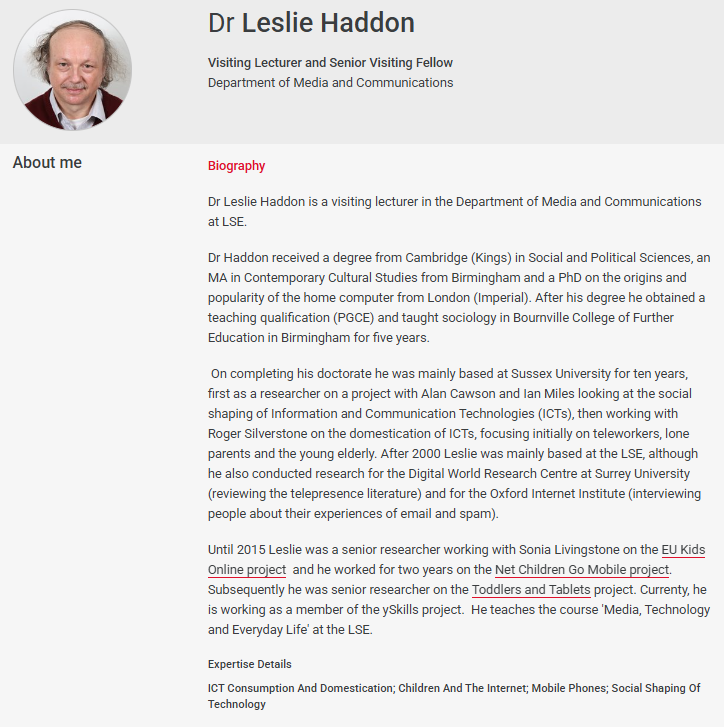
Source: LSE, https://www.lse.ac.uk/media-and-communications/people/visiting-and-associate-staff/leslie-haddon (page viewed in September 2025)
Terhi Rantanen (LSE)
Terhi Rantanen taught me media history and media globalization in her course Media and Globalisation and was my MSc/MA program director.
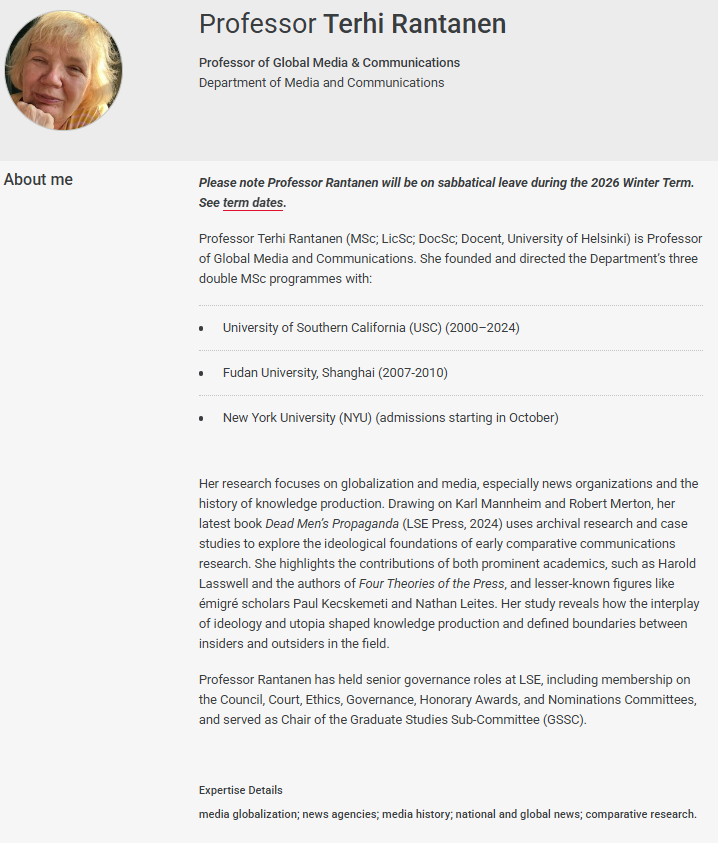
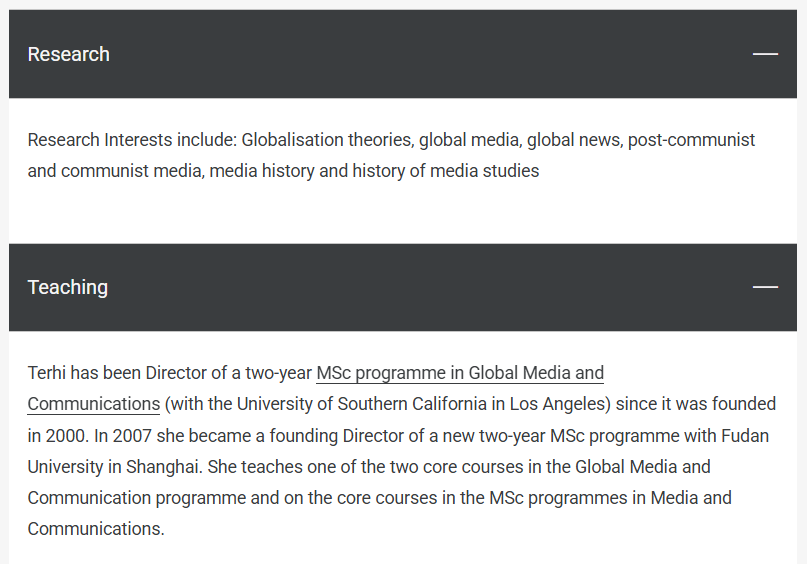
Source: LSE, https://www.lse.ac.uk/media-and-communications/people/academic-staff/terhi-rantanen (page viewed in September 2025)
Alfonso Puyal Sanz (Complutense)
Alfonso Puyal Sanz taught me the history and sociology of television programs and television programming in his course Programación Audiovisual.
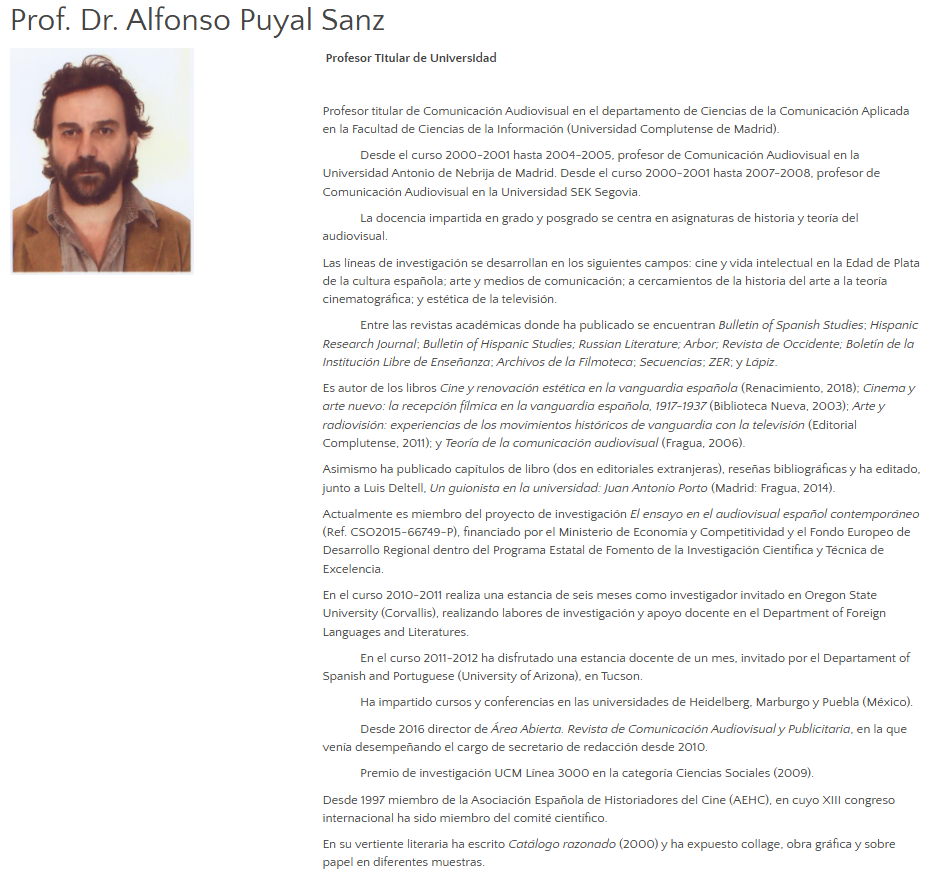
Source: Universidad Complutense de Madrid, https://www.ucm.es/cap/prof-dr-alfonso-puyal-sanz (page viewed in September 2025)
Ricardo de Cala Castillo (Complutense)
Ricardo de Cala Castillo taught me marketing in his course Plan de Marketing and advertising and promotion in his course Publicidad y Promoción.
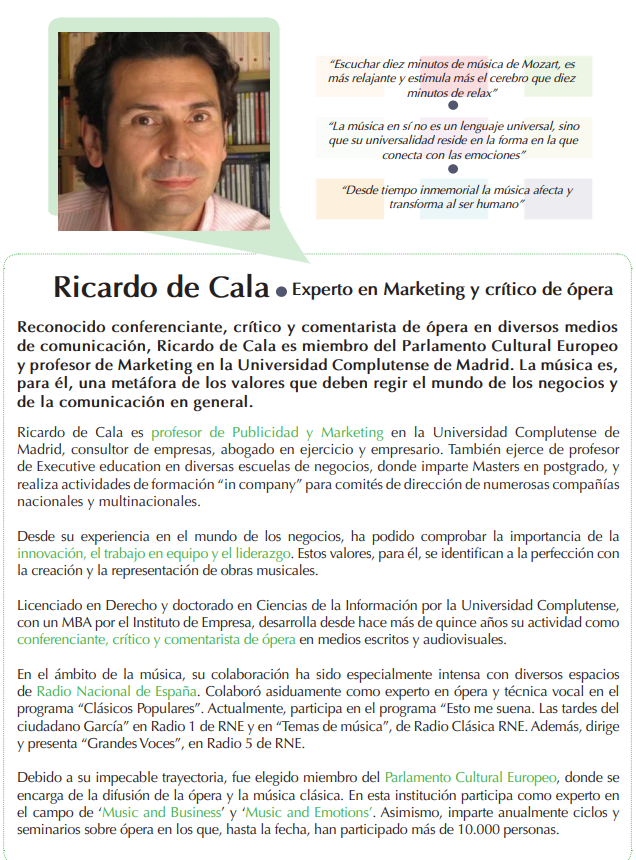
Source: Diserta Conferenciantes, https://www.disertaconferenciantes.com/bios/ricardo_de_cala_bio.pdf (page viewed in September 2025)
Jean-Marc Lehu (Paris 1)
Jean-Marc Lehu taught me crisis management and crisis communication in his course Communication et gestion de crise.
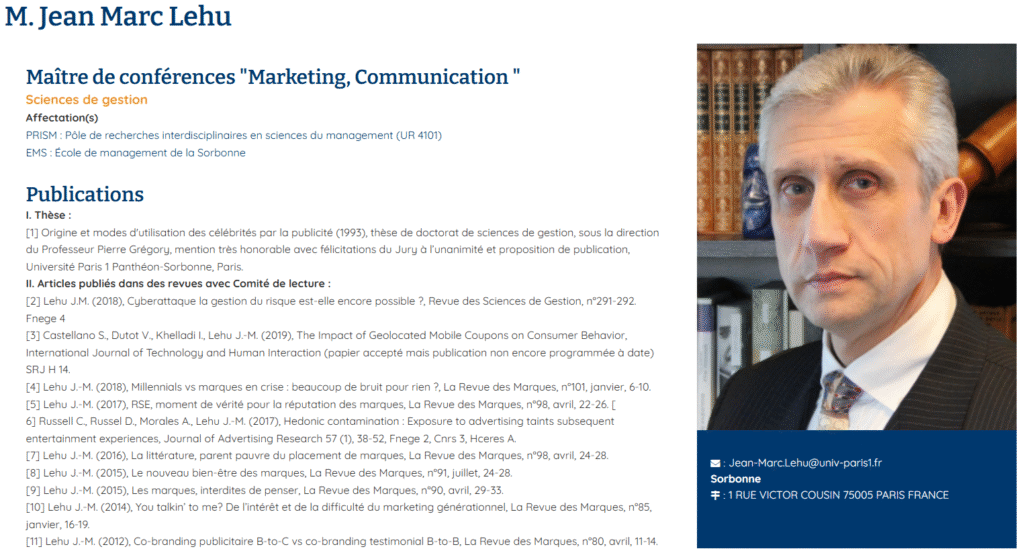
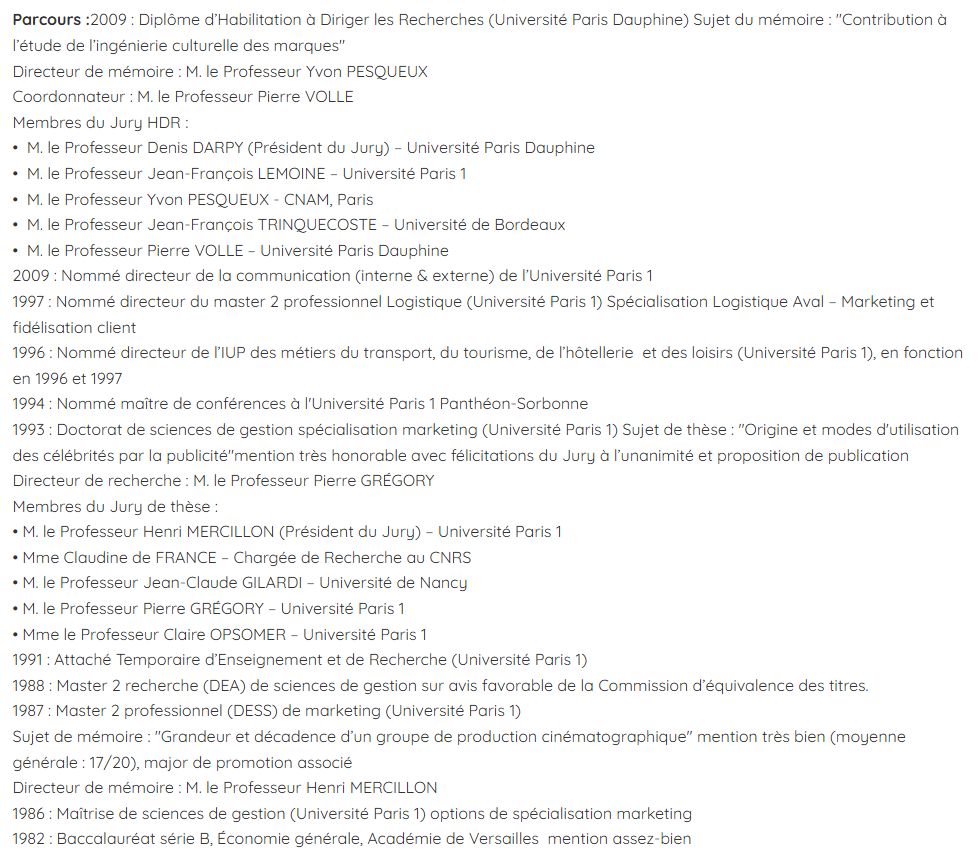
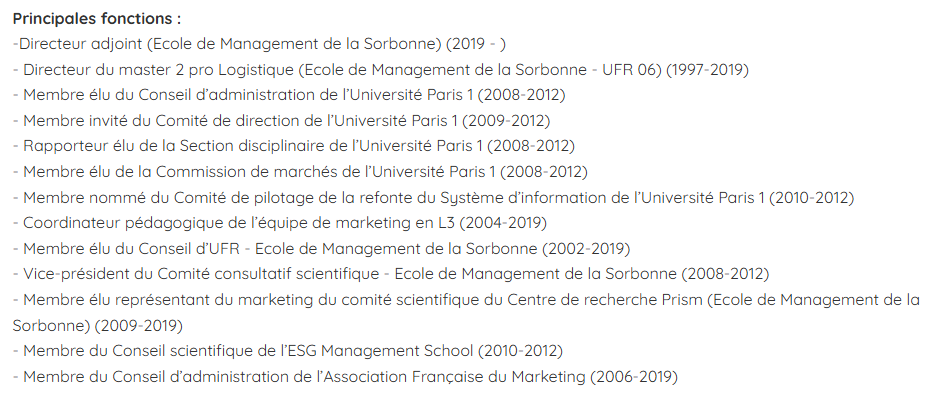
Source: Université Paris 1 Panthéon-Sorbonne, https://www.pantheonsorbonne.fr/page-perso/jean-marc.lehu%40 (page viewed in September 2025)
3.3 Management and Strategy
“A good teacher can inspire hope, ignite the imagination, and instill a love of learning.”
Brad Henry
Corentin Curchod (Paris 1)
Corentin Curchod taught me strategic management in the course Theory of the Firm, which he taught alternately with Régine Vanheems.
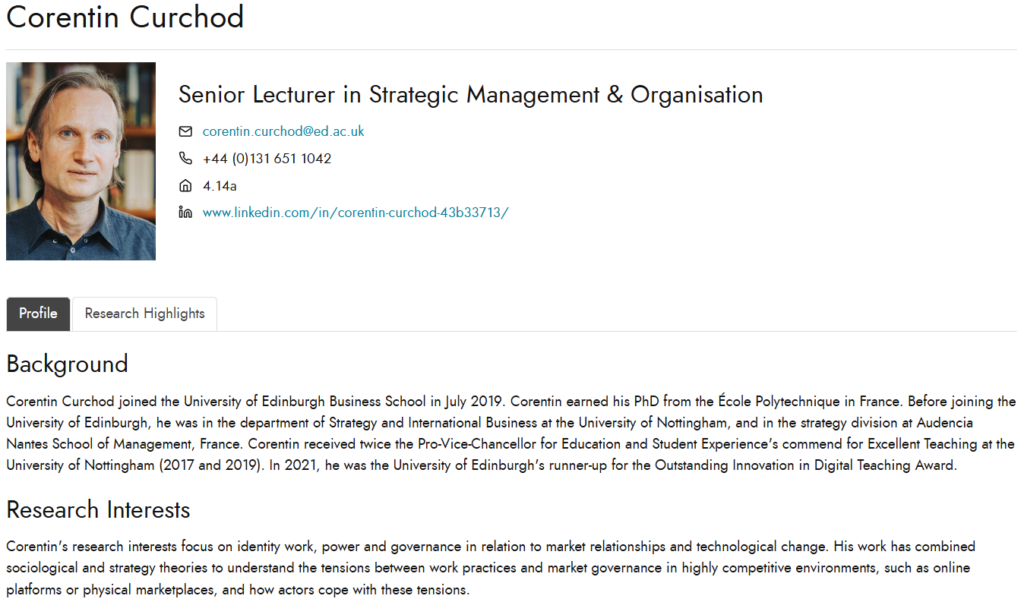
Source: University of Edinburgh Busines School, https://www.business-school.ed.ac.uk/staff/corentin-curchod
Corentin Curchod currently serves as a Senior Lecturer in Strategic Management & Organisation at the University of Edinburgh Business School. He holds a BSc in Management from ESCP Business School and he completed the Agrégation in Economics and Management at the Ecole Normale Supérieure (ENS) de Cachan in 1999, followed by an MSc in Microeconomics (major subject: Theory of the Firm) at the Université Paris 1 Panthéon-Sorbonne in 2000, and a PhD in Management from the École Polytechnique in 2004. Over his tenure as a world-leading strategy scholar, his university affiliations have spanned several premier European institutions: he began his formal faculty career as a Lecturer in Strategic Management at the University of Paris 1 Panthéon-Sorbonne (2000-2007), and subsequently expanded his research portfolio as a faculty member at both the Strategy Division of Audencia Nantes School of Management (2007-2011) and the Department of Strategy and International Business of the University of Nottingham (2011-2019), before joining the faculty and Strategy Group of the University of Edinburgh in July 2019.
Corentin Curchod (Sorbonne) is, with Ricardo de Cala Castillo (Complutense), one of the two great professors who made me want to become a teacher. As one of the most brilliant minds and most amazing professors I have ever met, his great influence has been foundational in my life. He was my first professor of strategy and instilled in me his passion for strategic management. I would not have taken the international strategy course at the Complutense without him, I would not have completed the Master’s degree in International Strategic Management (M2 MSI) at the Sorbonne without him, and I would not have started my career as a consultant at a global management and technology consulting firm like Accenture without him.
Alain Ducray (Lagardère, Paris 1)
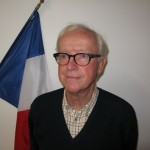
Alain Marie Ghislain René Ducray
Alain Ducray was my professor of strategy in the Master’s program in International Strategic Management at Université Paris 1 Panthéon-Sorbonne.
One of the leading French corporate strategy practitioners of his generation, Alain Ducray held several senior strategic positions at the Lagardère Group (formerly Matra-Hachette) between 1988 and 2006: Director of Strategic Evaluation and Development, Vice-President for Strategy and Development, and Director of International Media Development. At Lagardère, he worked on corporate strategy, international development, media expansion and the emergence of the Internet and the digital economy, including the development of Club Internet, one of the pioneering French Internet service providers. He also served as a board member of Hachette Distribution Services, now Lagardère Travel Retail.
He became President of AFPLANE, the historic French Corporate Strategy Association, from 2007 to 2012 (with roots in the 1950s as Association française des Planificateurs d’Entreprises, formally constituted in 1971 as Association française pour la planification en entreprise, and later renamed Association française de stratégie et de développement d’entreprise), and served as its final president. After leaving Lagardère, he became Director and Partner at Biporis, a management and strategy consulting firm, and later Partner at Orix Partners in strategy and corporate development. He was also a member of the Institut français des administrateurs (IFA) and served on the boards of several companies. A graduate of the CPA (Centre de perfectionnement aux affaires), which merged with HEC Executive Education in 1999 to form the HEC Paris Executive MBA, he belongs to the EMBA HEC 1988/P promotion and is Deputy Delegate of his promotion. He also taught at HEC Paris and at Université Paris 1 Panthéon-Sorbonne. He later entered local public service as a municipal councillor (conseiller municipal) in Isserpent, in the Allier, first elected in 2014 and re-elected in 2020 and 2026 for a third consecutive term.
Alain Ducray taught me strategic diagnosis and strategic decision-making in multinational corporations through real cases of international expansion. He believed that true managerial intelligence lies in recognizing a bad decision in time and correcting course, concluding simply: “Il faut du courage et de la modestie” (“It takes courage and humility”). Learning strategy from a man who had practiced it at the highest level of a major global media group like Lagardère was an extraordinary opportunity. He strengthened my passion for strategy and internationalization, and embodied for me what a leader and strategist should be: a man of both thought and action.
Hubert de La Bruslerie (Paris 1)
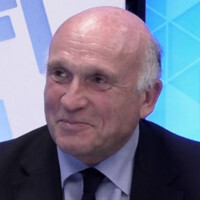
Hubert Pierre Jean Marie Étienne Piochard de La Bruslerie was my academic director for five years (DEUG, MSG, M2) and my Albus Dumbledore 🙂
Hubert de La Bruslerie was the Director of the Sorbonne School of Management (UFR06/Gestion Sorbonne/Ecole de Management de la Sorbonne) between 2000 and 2009, including when I was a student there between 2002 and 2007. He welcomed me at the Sorbonne (amphithéâtre Richelieu) when I entered the beautiful Sorbonne building for the first time in my life at the age of 17. He was also the Director of the Sorbonne BBA (Maîtrise de Sciences de Gestion) and the President of MSG France (the association of the Bachelors of Business Administration at public universities in France). He was Vice-Director of the Sorbonne School of Management between 1998 and 2000 when the great Jacques Rojot was the Director of the UFR 06.
One of France’s leading professors and researchers in finance who taught at the best universities for business, management, and finance in France (Université Paris Dauphine from 1978 to 1981, Université Sorbonne Paris Nord from 1981 to 1988, Université Paris 1 Panthéon-Sorbonne from 1988 to 2009, Université Paris Dauphine from 2009 to 2020, Director of the Dauphine Master 270 – Corporate Finance & Management from 2010 to 2020, Professor Emeritus at Université Paris Dauphine since 2020, Dean of the FACO between 2021 and 2024 and, finally, Researcher at IAE Paris Sorbonne Business School – Université Paris 1 Panthéon-Sorbonne since 2021) and alumnus of both Sciences Po (1972-1975 Master’s degree in Accounting and Finance) and Université Paris Dauphine (1975-1976 Research Master’s degree in Finance and 1976-1979 PhD in Management, Finance specialization), Hubert de La Bruslerie supervised my business administration and management studies at the Sorbonne for five years. He decided to send me to the Complutense University of Madrid in my fourth year so that I could improve my Spanish and become a trilingual international manager (that was his idea). He was the founder and director of the Sorbonne Master’s degree in International Strategic Management (Master MSI) from 2000 to 2009, and during my final year at the Sorbonne, he wrote me a letter of recommendation that he sent to the London School of Economics and Political Science so that I could continue my studies at LSE after obtaining all my management degrees (DEUG/associate degree, MSG/bachelor’s degree and M2/master’s degree) with honors from the Université Paris 1 Panthéon-Sorbonne and graduating at the top of my class (valedictorian in the US or major de promotion in French) from his highly regarded master’s degree program that he called “the Sorbonne MBA”, ranked #1 or #2 among the best master’s degrees in strategy and consulting in France for many years (including in 2025 and in 2026) by SMBG/Eduniversal.
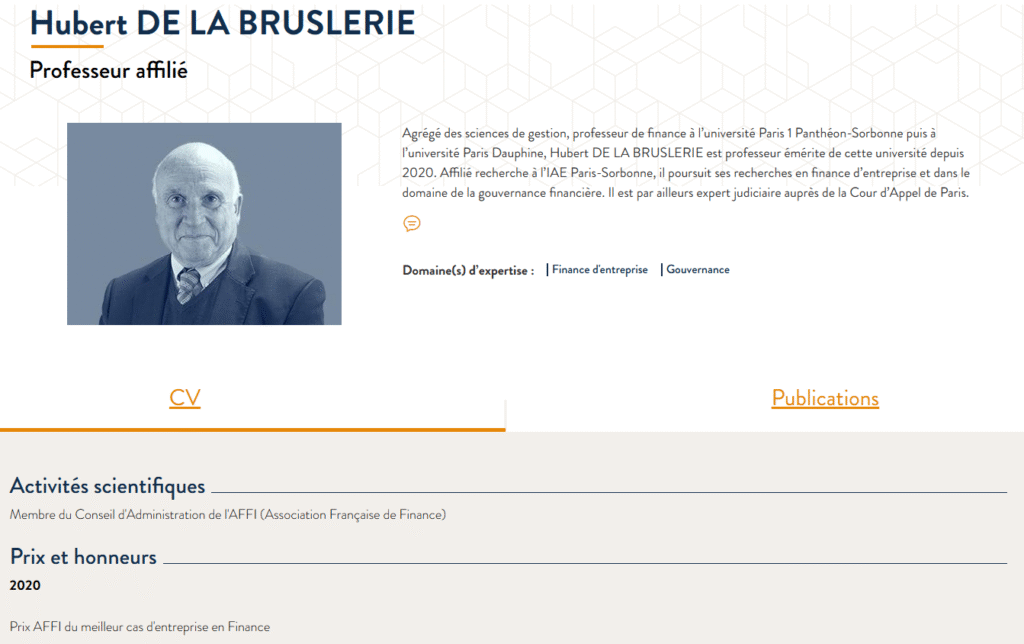
Source: IAE Paris, https://www.iae-paris.com/fr/enseignants/annuaires/hubert-de-la-bruslerie (page viewed in September 2025)
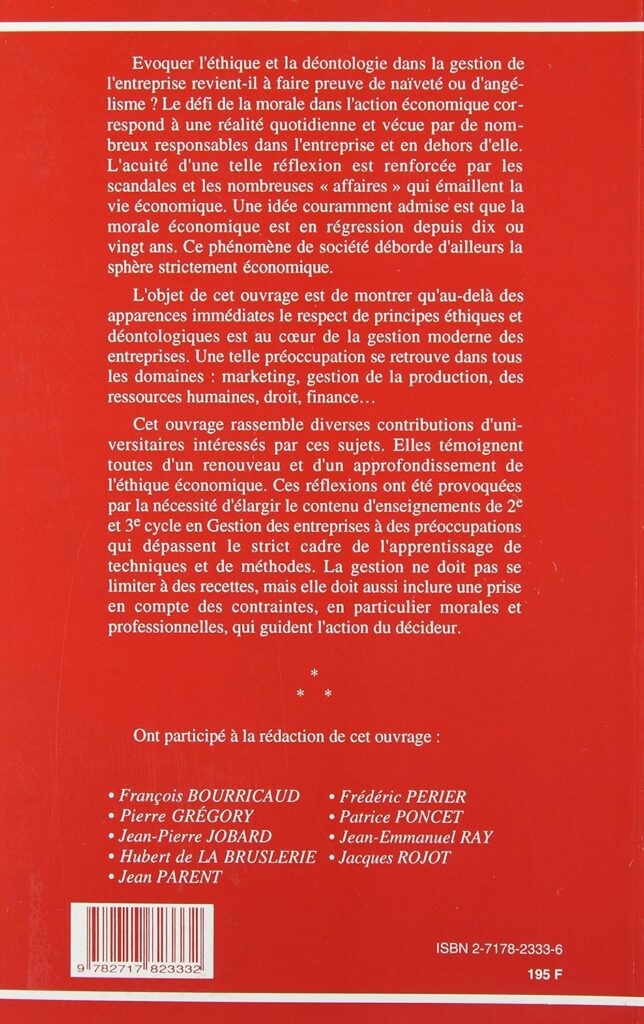
Hubert de La Bruslerie has written numerous articles and books on corporate finance and financial governance, but his work that had the greatest impact on me as a management student was his book on business ethics: “Éthique, Déontologie et Gestion de l’Entreprise” (collection Gestion, Série : Politique générale, Finance et Marketing, Economica, 1992), written with François Bourricaud (famous sociologist in France), Jean-Pierre Jobard and Patrice Poncet (two of the greatest finance academics in the history of business and management studies in France), Pierre Grégory (one of the greatest marketing academics in the history of business and management studies in France), Jean Parent (one of the greatest academics of industrial economics and production management in the long history of the University of Paris), Frédéric Perier (strategy consultant), Jean-Emmanuel Ray (one of the greatest social law and labor law academics in the history of law and legal studies in France) and Jacques Rojot (one of the greatest academics of human resource management, organization, negotiation and conflict management in the history of business and management studies in France). Hubert de La Bruslerie, Pierre Grégory, Jean-Pierre Jobard, Jean Parent, Patrice Poncet, Jean-Emmanuel Ray and Jacques Rojot were all stellar scholars and legendary professors at the Sorbonne School of Management (Ecole de Management de la Sorbonne – Université Paris 1 Panthéon-Sorbonne).
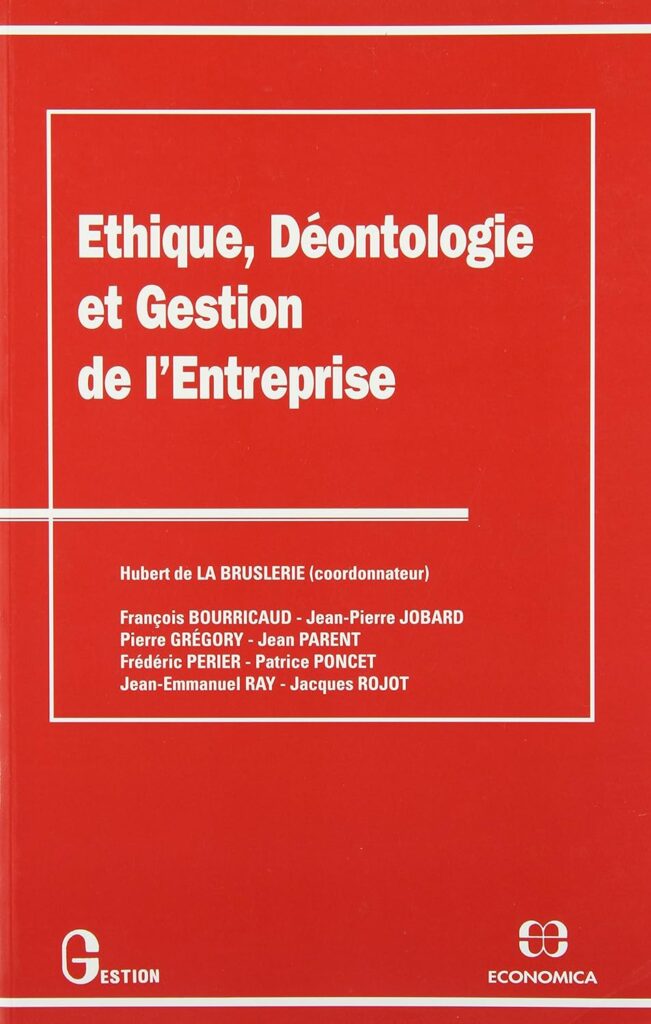
Here is a very interesting interview of Hubert de La Bruslerie on the history and the future of business and management studies (“Sciences de Gestion”) in 2019 by Xerfi Canal (in French):
Max Peyrard (Paris 1)

Max Leo Ernest Peyrard (1932-2023) taught me international economics, international trade, and international business and was my Gandalf 🙂
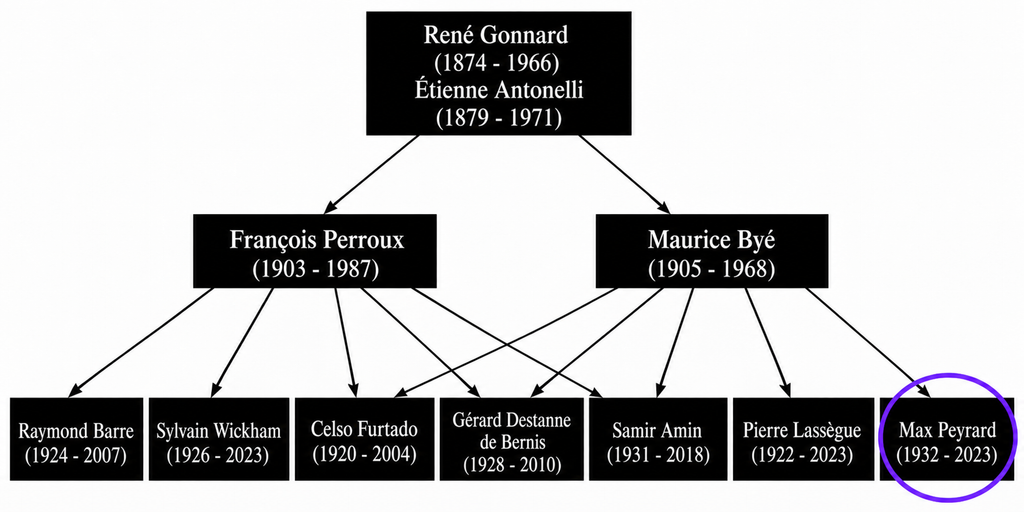
Academic genealogy of the great Max Peyrard, my professor at Université Paris 1 Panthéon-Sorbonne for three years, from age 17 to 20
Max Peyrard changed my life completely by introducing me to the Erasmus program of the European Union and by often talking during his classes about all the international opportunities we had as students at the Sorbonne School of Management and as future managers. Professor Emeritus at the Université Paris 1 Panthéon-Sorbonne (UER 06 and then UFR 06), ad personam Jean Monnet Chair of the European Union awarded by the European Commission, Fulbright Visiting Scholar at Harvard University and MIT – Massachusetts Institute of Technology in 1972-1973, founder of the Master’s degree in International Business Management at the Université Paris 1 Panthéon-Sorbonne in 1989, ranked first or second among the best master’s degrees in international management in France for many years by Eduniversal (Master GEAI – formerly DESS Gestion Européenne et Internationale, then Master 2 Gestion d’Entreprise et Affaires Internationales, and now called Master Gestion des Entreprises à l’International), and eminent French scholar of management, international management, international marketing, international strategy, international trade, finance, international finance, tax, international taxation, economics, international economics, geoeconomics, EU geoeconomics, international affairs, and European integration since the 1960’s and his doctoral dissertation: “Proportion des facteurs et spécialisation internationale” (Paris, 1962). Max Peyrard’s doctoral thesis was examined by a stellar jury comprising three eminent professors of economics and political economy at the Université de Paris: Maurice Byé, who served as president of the jury; André Marchal; and Jean Weiller. Max Peyrard studied under Maurice Byé at the Faculty of Law and Economics of the University of Paris during the 1950s and 1960s, and Maurice Byé later supervised his doctoral thesis. One of the leading French economists of the twentieth century, Maurice Byé was a pioneering scholar of international economic relations, development studies, economic development and underdevelopment, European integration, multinational corporations, and the asymmetric power relations of the international economy. From 1948, Maurice Byé developed his teaching of political economy and international economics at the Faculty of Law and Economics of the University of Paris through his Cours de relations économiques internationales, published in Paris by Les Cours de droit. Successive editions appeared in 1951–1952, 1952–1953, 1953–1954, 1954–1955, 1955–1956, 1956–1957, and 1958. This sustained program of teaching and intellectual development culminated in 1959, when Dalloz published the first edition of Maurice Byé’s major work, Relations économiques internationales. The book became a best seller and one of the landmark works of French international economics and a standard reference that influenced and trained generations of students. Its influence continued long after Mautice Byé’s death through successive revised editions, notably under the direction of his former student Gérard Destanne de Bernis. Maurice Byé was also a pioneer of the academic study of European integration. In 1963, together with Pierre-Henri Teitgen, he created the Centre universitaire d’études des Communautés européennes (CUECE) at the Université de Paris, one of the pioneering French university centers devoted specifically to the study of the European Communities. Maurice Byé headed its economic section, making the center an important institutional expression of his longstanding scholarly engagement with European economic integration. Maurice Byé was intellectually close to the legendary François Perroux, one of the most influential French economists of the twentieth century and founder of the ISEA in 1944. Maurice Byé belonged to an exceptional generation of French economists who trained a remarkable international group of scholars. Among the distinguished economists whose doctoral work he supervised or closely guided were Celso Furtado of Brazil, one of the founders of Latin American structuralist development economics; Samir Amin of Egypt, whose doctoral research was jointly followed by Byé and Perroux and who became one of the leading theorists of dependency and unequal development; Víctor Alfonso Maldonado of Mexico, an economist, intellectual, diplomat, and political figure whose doctoral research on Latin American economic integration was conducted under Byé’s direction; Shlomo Sitton of Israel, an economist and senior government official; Pathé Diagne of Senegal; Nicolas Sarkis of Lebanon and France; and the famous French economists Gérard Destanne de Bernis, a major scholar of development studies and international economics, Michel Beaud, Jacques Freyssinet, Danièle Blondel, Roger Cukierman, Jean-François Besson, and Pierre-Bernard Cousté. Pierre Lassègue‘s own doctoral thesis, La Réforme de l’entreprise (Toulouse, 1948), was also supervised by Maurive Byé before Pierre Lassègue went on to play a foundational role in establishing business administration and management as an academic field at the Université de Paris and, subsequently, as a department at the Université Paris 1 Panthéon-Sorbonne. Max Peyrard therefore belonged to a distinguished intellectual lineage connecting some of the most important currents of postwar French and international economics, political economy, development studies, and the emerging academic discipline of business administration and management. Max Peyrard was an exceptional professor who trained many generations of economics, business administration, and management students, first in the 1960s at the Université de Paris (with origins dating back to before 1045 and dissolved in 1970), and then at the Université de Paris I Panthéon-Sorbonne from its founding in 1971 until his official retirement (and even afterward, as a beloved Professor Emeritus). He was a very kind, generous, humble, and sensitive human being, who perfectly embodied the values of the French University, the University of Paris, the Sorbonne, and the University of Paris 1 Panthéon-Sorbonne, and I was so heartbroken when he passed away in 2023…
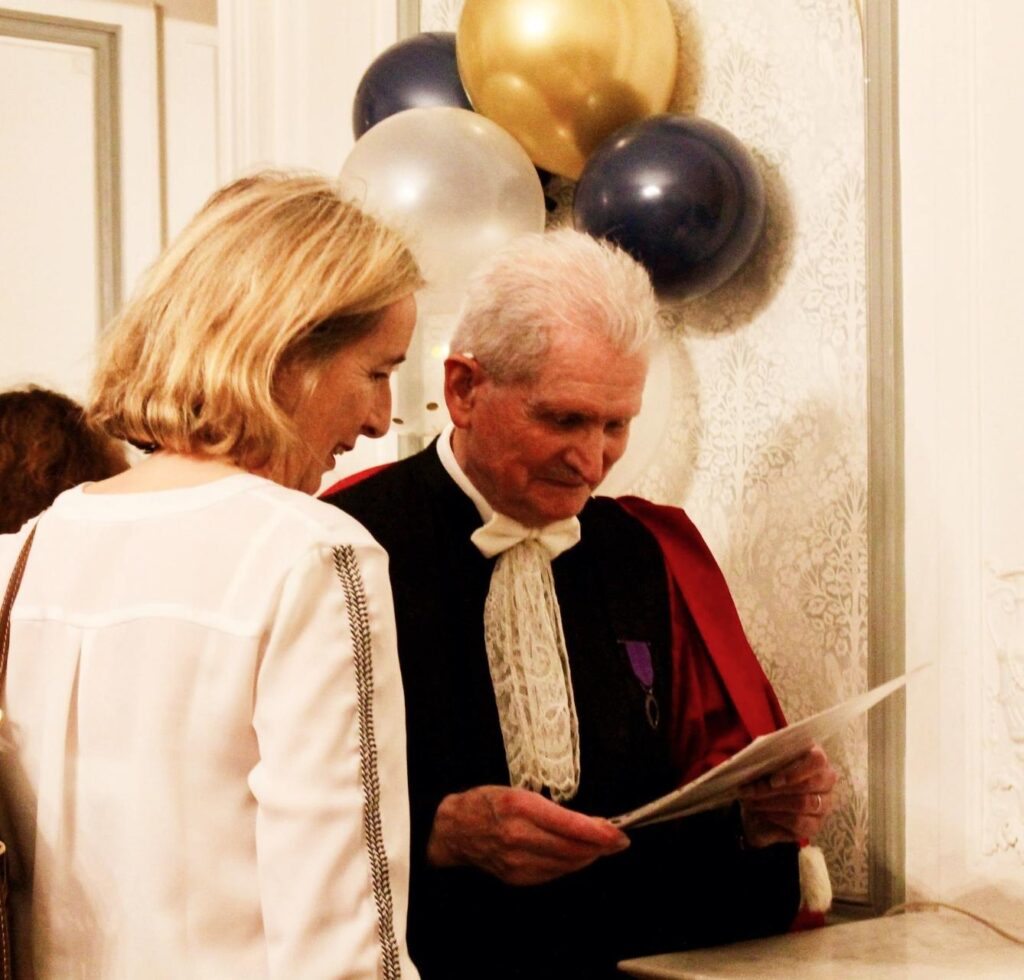
Max Peyrard in 2019 during the 30th anniversary of the Sorbonne Master’s degree in International Business Management (GEAI) that he created in 1989.
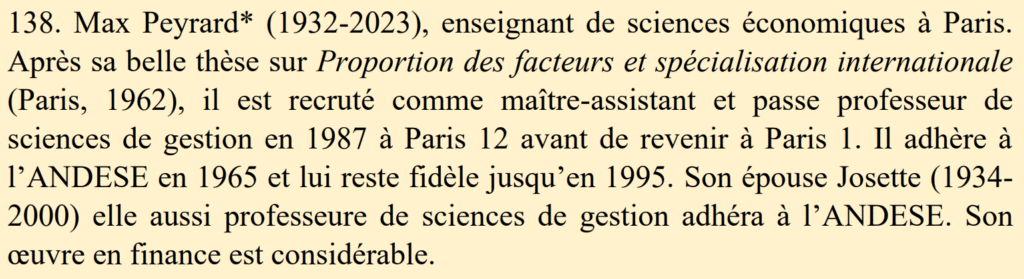
Source: “La corporation des économistes. Une histoire de l’ANDESE 1953-2023” de Luc MARCO (2ème édition, EDI-GESTION, 2024).


Source: Fulbright Scholar Program (fulbrightscholars.org), https://fulbrightscholars.org/grantee/max-peyrard
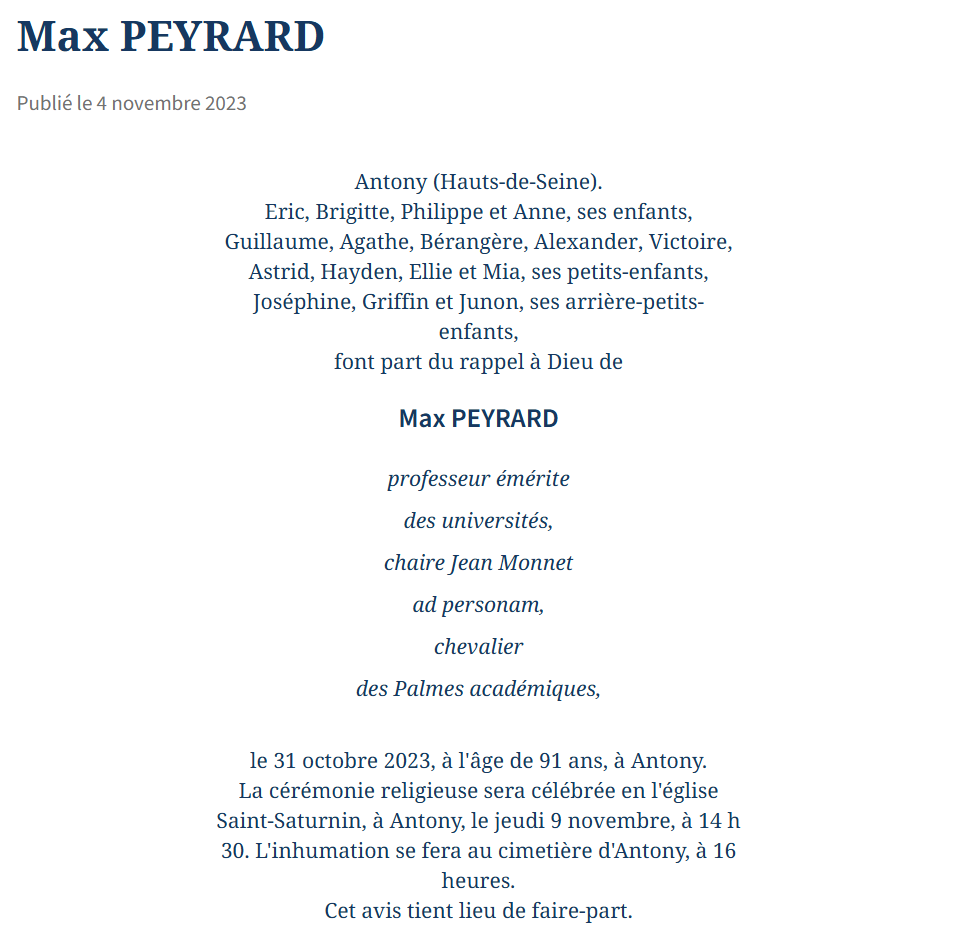
Source: Carnet du jour, Le Figaro, https://carnetdujour.lefigaro.fr/deces/annonces/474394105/
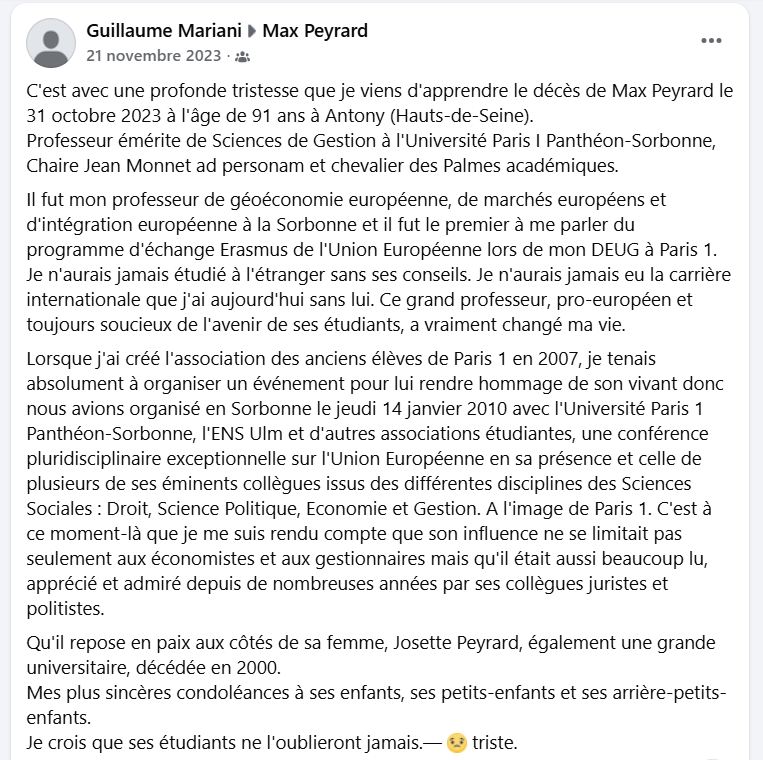
Source: Max Peyrard and I were friends on Facebook and this is my post on his Facebook wall when he passed away in 2023 💔
I am eternally grateful to all my teachers and professors 🙏